Google Business Profile for Doctors: Optimization Tips for Better Local Visibility
When patients search online for a nearby doctor, dentist, specialist, or medical clinic, they often want practical information immediately: the clinic's location, opening hours, contact number, available services, directions, and patient reviews. A well-optimized Google…

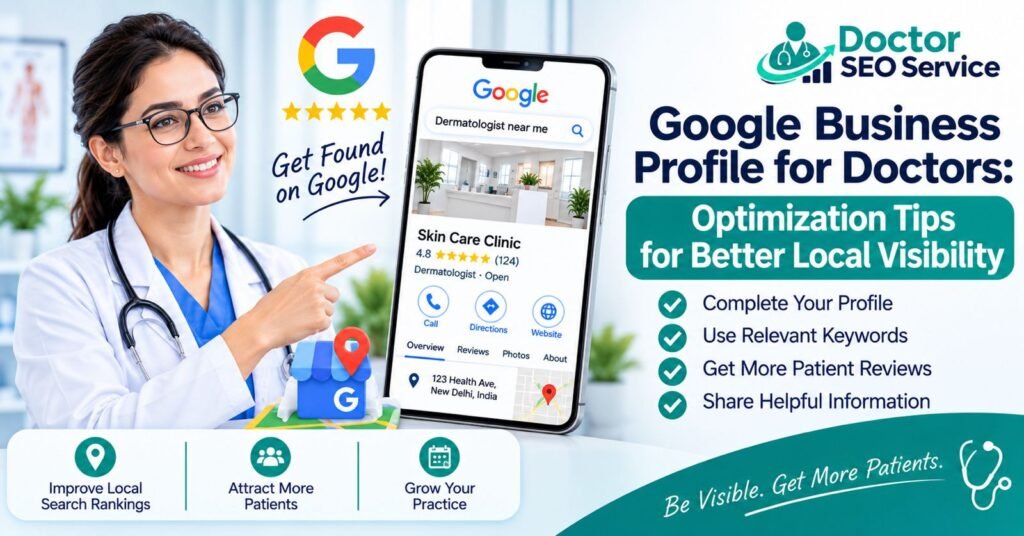
When patients search online for a nearby doctor, dentist, specialist, or medical clinic, they often want practical information immediately: the clinic’s location, opening hours, contact number, available services, directions, and patient reviews.
A well-optimized Google Business Profile for doctors helps make this information available through Google Search and Google Maps. It can strengthen a medical practice’s local online presence and make it easier for prospective patients to discover and contact the clinic.
Google Business Profile is a free tool that allows eligible healthcare professionals and medical practices to manage how their business information appears across Google. However, simply creating a profile does not guarantee higher rankings or more appointments. Results depend on several factors, including relevance to the search, distance from the searcher, and how prominent the business is online.
For doctors and clinics, successful optimization involves more than adding a phone number and uploading a photograph. It requires accurate business information, appropriate categories, relevant services, authentic patient reviews, useful photographs, consistent website information, and ongoing profile management.
In this guide, we explain how doctors can optimize their Google Business Profile, avoid common mistakes, and integrate local SEO with a broader healthcare digital marketing strategy.
What Is Google Business Profile for Doctors?
Google Business Profile is a business listing management tool that enables eligible healthcare professionals, clinics, hospitals, and other medical businesses to manage their public-facing business information on Google.
Depending on the business and available features, a profile may display:
- Doctor or clinic name
- Primary business category
- Address and map location
- Contact telephone number
- Website link
- Opening hours
- Available medical services
- Clinic photographs
- Patient reviews and ratings
- Appointment or booking links
- Updates and other profile features
For example, when someone searches for a dermatologist in Delhi, Google may display a map and a selection of nearby dermatology practices. These local results can help searchers compare relevant businesses and decide which clinic to contact.
An optimized profile makes it easier for patients to understand what a practice offers and how to reach it.
Important: Google determines which businesses appear for individual searches. No agency or optimization technique can guarantee a particular position in Google Maps or the local search results.
12 Google Business Profile Optimization Tips for Doctors
1. Claim and Verify Your Google Business Profile
The first step is to claim and verify the profile representing your medical practice.
Visit the official Google Business Profile website to get started or manage an existing listing.
Verification helps establish that you are authorized to manage the business information. Google determines which verification methods are available for a particular business.
Before creating a new profile, check whether your clinic or professional listing already exists. Claiming an existing eligible profile can help prevent duplicate listings and conflicting business information.
Recommended actions:
- Search for your clinic name on Google and Google Maps.
- Check whether a profile already exists.
- Claim the correct listing or create one if appropriate.
- Complete Google’s verification process.
- Review the information after verification.
- Assign profile management access only to authorized staff or marketing partners.
Example: A dental clinic in Gurgaon may already have a listing created from information available online. Instead of creating another profile, the clinic should first investigate whether the existing listing can be claimed and corrected.
A verified, accurately maintained profile gives patients a more reliable source of information about the practice.
2. Use Your Real-World Business Name
Your Google Business Profile name should reflect the name your practice uses in the real world, including its signage and established business identity.
Avoid adding extra keywords, locations, specialties, or promotional phrases simply to influence rankings.
For example:
Appropriate business name:
Sunrise Dental Clinic
Potentially problematic business name:
Sunrise Dental Clinic – Best Dentist in Delhi – Teeth Implants and Braces
The second example adds search terms that may not form part of the actual business name. Google can restrict or suspend profiles that violate its business representation guidelines.
You can communicate your specialties and services through the appropriate profile fields, website content, and other relevant sections instead.
Review the official Google guidelines for representing your business before making significant changes to your listing.
3. Select the Most Relevant Primary Category
Your primary category helps Google understand the main type of business you operate.
Choose the most specific available category that accurately describes your practice. The appropriate category depends on the actual business model and the categories Google offers in your market.
For example, depending on the available options and the nature of the business, a practice might select a category relating to:
- Dentist
- Dermatologist
- Cardiologist
- Physiotherapist
- Plastic surgeon
- Fertility clinic
- Medical clinic
These are illustrative examples, not a guarantee that every label is available in every region.
Additional categories may be appropriate when they accurately describe other core aspects of the business. However, adding unrelated categories or selecting categories solely because they contain popular keywords is not a sound optimization strategy.
Best practice: Choose the category that most accurately represents the business itself, rather than attempting to list every treatment it offers.
For example, a dermatology clinic should not select unrelated categories just because it also provides services that patients might search for under other medical specialties.
4. Complete Every Relevant Profile Field
Incomplete business information can make it harder for patients to decide whether your clinic meets their needs.
Review your profile regularly and complete all applicable fields.
| Profile Element | Optimization Recommendation |
|---|---|
| Business name | Use the genuine business name |
| Primary category | Select the most relevant available category |
| Address | Enter the accurate physical clinic address |
| Phone number | Use a number that connects patients to the practice |
| Website | Link to the official clinic or relevant location page |
| Opening hours | Enter accurate regular hours |
| Special hours | Update holiday and temporary schedules |
| Services | Add applicable services where the feature is available |
| Appointment link | Use a genuine booking page, if available |
| Photos | Upload authentic, high-quality clinic images |
| Business description | Explain the practice clearly and accurately |
Check the details whenever your clinic moves, changes its telephone number, updates its schedule, or introduces a new booking process.
Accurate information improves the patient experience and helps avoid unnecessary calls caused by outdated details.
5. Write a Clear, Patient-Focused Business Description
Your business description should explain who you are, what your practice offers, and what patients can expect when contacting you.
Use natural language rather than repeating the same keyword several times.
For example, a physiotherapy clinic might describe its services as follows:
“Our physiotherapy clinic provides assessment and rehabilitation services for people seeking support with movement, mobility, and physical function. Our team works with patients to develop care plans appropriate to their individual needs. Contact the clinic for information about available services, appointment times, and consultations.”
This description is informative, professional, and focused on the practice.
Avoid unsupported claims such as “the number one clinic in India,” guaranteed treatment outcomes, or statements that imply every patient will achieve the same result.
Google also restricts links and promotional content in the Business Profile description field. Keep the description focused on the practice itself and use the designated website and booking fields for links.
6. Add Relevant Medical Services
Where Google provides a services section for your profile, use it to describe the services your practice genuinely offers.
This can help prospective patients understand whether your clinic provides the care or consultation they are looking for.
For example:
Dental clinic
- Dental consultations
- Preventive dental care
- Dental implants
- Orthodontic consultations
- Cosmetic dentistry
Dermatology clinic
- Dermatology consultations
- Acne assessment
- Skin condition consultations
- Hair and scalp consultations
Physiotherapy clinic
- Physiotherapy assessments
- Mobility rehabilitation
- Sports rehabilitation
- Post-operative rehabilitation, where offered
These examples should be adapted to your actual qualifications, facilities, and services.
Do not add procedures simply because they have high search volume. The information should reflect what your practice genuinely provides.
For more comprehensive visibility, support your profile with dedicated, useful website pages. For example, a clinic can connect its local SEO strategy with its broader SEO services for physiotherapists or SEO services for dentists.
The goal is to give prospective patients consistent, helpful information wherever they discover your practice.
7. Upload Authentic, High-Quality Clinic Photos
Photographs help prospective patients understand what a clinic looks like before visiting.
Relevant, genuine images may include:
- Clinic exterior and entrance
- Reception and waiting area
- Consultation rooms
- Treatment rooms, where appropriate
- Medical equipment and facilities
- Staff portraits with permission
- The doctor or practitioner in a professional setting
Use clear images that accurately represent the clinic. Avoid misleading photographs, unrelated stock images presented as your actual facility, or visuals that exaggerate the services available.
Patient photographs and clinical images require particular care. Obtain appropriate consent and follow applicable privacy, confidentiality, and professional requirements before publishing identifiable patient information.
For example, a patient searching for a fertility clinic may want to understand the facility and consultation environment. Authentic photographs can help communicate the setting without making promises about treatment success.
A practical approach is to establish a photo-update routine. Review the existing images periodically and replace outdated photographs when the clinic changes its appearance or facilities.
8. Build a Consistent, Ethical Patient Review Process
Reviews can influence how prospective patients evaluate a medical practice.
They may help people understand the clinic’s communication, appointment process, accessibility, and general patient experience. Reviews can also contribute to a business’s prominence in local search, although their influence on rankings is not guaranteed.
Create a consistent process for inviting genuine patients to share honest feedback.
For example, after an appointment, your administrative team could provide a neutral invitation:
“If you would like to share feedback about your experience at our clinic, you can leave an honest review on Google. Your feedback is appreciated.”
Keep the request voluntary and avoid pressuring patients to provide positive reviews.
Follow these review management practices:
- Ask for honest feedback without requiring a positive rating.
- Never purchase reviews or create fake patient accounts.
- Do not offer rewards in exchange for reviews.
- Do not selectively solicit only positive reviews.
- Avoid sharing patient details in public responses.
- Respond professionally to both positive and negative feedback.
Healthcare providers should take special care not to confirm someone’s patient status or disclose medical information when replying to a review.
For example, rather than discussing an alleged diagnosis or treatment in a public response, a clinic can write:
“Thank you for sharing your feedback. We take concerns about the patient experience seriously. Please contact our office directly so our team can review your concerns through the appropriate channel.”
This response acknowledges the concern without revealing confidential information.
9. Keep Your Website and Business Information Consistent
Your Google Business Profile should accurately represent the same practice described on your website.
Review important details across your profile and website, including:
- Practice name
- Physical address
- Telephone number
- Opening hours
- Medical specialties
- Available services
- Appointment information
- Location-specific details
Inconsistent information can confuse patients and create avoidable friction when they try to contact or visit the clinic.
For practices with multiple locations, create a clear website page for each genuine clinic location. Where appropriate, link each location’s profile to the corresponding page rather than sending every visitor to an unrelated general page.
For example, a multi-location dental practice may have separate pages showing the correct address, directions, services, and appointment information for each branch.
Your website also needs useful, accessible content that explains the practice and its services.
Google’s SEO Starter Guide explains fundamental practices for helping search engines discover, understand, and present website content.
Combining an accurate profile with a well-structured website gives patients a more consistent experience across Google Search, Google Maps, and your website.
10. Publish Useful Updates Where Available
Google Business Profile may provide posting features that allow eligible businesses to share updates with customers.
When available, use these features to communicate useful, timely information rather than publishing repetitive advertisements.
Potential topics for a medical practice include:
- Updated clinic hours
- Holiday schedules
- Changes to appointment procedures
- New facilities or equipment
- General practice announcements
- Relevant educational events
- Information about how to contact the clinic
For example, a clinic could publish a notice explaining its revised opening hours during a public holiday.
Avoid sharing identifiable patient information, unsubstantiated medical claims, or content that promises guaranteed results.
Posts are not a substitute for maintaining the core profile information. If your opening hours change, update the relevant hours field rather than relying only on a post.
11. Optimize for Relevant Local Searches
Local SEO helps search engines connect a business with searches that have geographic intent.
Patients may search for terms such as:
- Dentist near me
- Dermatologist in South Delhi
- Physiotherapy clinic in Gurgaon
- Fertility clinic in Delhi
- Plastic surgeon near me
- Cardiologist in my area
Your profile should accurately identify the practice and its location. Your website can provide additional detail about specialties, consultations, facilities, and the areas relevant to your real-world service.
However, do not stuff keywords into your business name or create misleading location information.
Instead, incorporate relevant terms naturally into appropriate website headings, service descriptions, page titles, and location pages.
For example, a physiotherapy clinic serving patients in Gurgaon could publish a useful page explaining its physiotherapy services, location, appointment process, and accessibility information.
That page should provide genuine value rather than repeating the city name throughout every paragraph.
Google explains that local results are primarily influenced by relevance, distance, and prominence. Businesses cannot control every factor, particularly the searcher’s distance from the practice.
Read Google’s guidance on how local search results are ranked when developing your local optimization strategy.
12. Monitor Performance and Improve Your Strategy
Optimization should be an ongoing process, not a one-time task.
Google Business Profile performance reporting may provide information about how people discover and interact with a profile. The specific metrics and reporting options available can change.
Depending on the available reporting, monitor indicators such as:
- Searches that show your profile
- Profile views or interactions
- Website clicks
- Calls initiated from the profile
- Direction requests
- Appointment-related actions, where available
These metrics can help you understand whether your listing is generating meaningful engagement.
However, a click, call, or direction request does not automatically represent a new patient or a completed appointment.
Connect profile performance with your broader measurement process. Use website analytics and appropriate call or booking tracking to understand which enquiries lead to appointments, while respecting patient privacy and applicable data protection requirements.
Review performance periodically and investigate meaningful changes. For example, if website clicks increase but appointment enquiries remain unchanged, check the destination page, booking process, contact details, and mobile usability.
The aim is not simply to generate more profile interactions. It is to make it easier for suitable patients to find reliable information and contact your practice.
Google Business Profile Optimization Examples for Different Medical Specialties
The principles of local SEO are similar across healthcare, but each specialty has different patient information needs.
Google Business Profile for Dentists
A dental practice should make its location, opening hours, contact details, and available dental services easy to understand.
Relevant website content can explain dental consultations, preventive care, implants, orthodontics, and other services actually offered by the clinic.
A consistent process for requesting honest patient reviews can also help prospective patients evaluate the practice.
Learn more about SEO for dentists and dental clinics.
Google Business Profile for Physiotherapists
Physiotherapy clinics should clearly communicate their services, accessibility, location, and appointment process.
Their website can explain the types of assessments and rehabilitation services available, using accurate and understandable language.
Learn about SEO services for physiotherapists.
Google Business Profile for IVF Centres
Fertility services involve sensitive personal information, so privacy and respectful communication are particularly important.
An IVF centre should provide accurate contact details, consultation information, opening hours, and facility information. Any information about treatments or outcomes should be reviewed for accuracy and presented responsibly.
Explore SEO services for IVF centres.
Google Business Profile for Plastic Surgeons
Plastic surgery practices should accurately represent the practitioner’s identity, qualifications, services, and location.
Avoid misleading before-and-after images, exaggerated promises, or claims that suggest a particular result is guaranteed. Obtain appropriate consent before publishing patient images.
A broader website strategy can support this work through SEO services for plastic surgery practices.
Common Google Business Profile Mistakes Doctors Should Avoid
Even an established practice can weaken its local presence through avoidable errors.
Common mistakes include:
1. Keyword stuffing the business name: Adding specialties and location terms that are not part of the real-world business name can violate Google’s guidelines.
2. Creating duplicate profiles: Multiple listings for the same practice at the same location can cause confusion and create management problems.
3. Choosing irrelevant categories: Categories should describe the actual business, not every service or keyword a clinic wants to target.
4. Displaying incorrect hours: Outdated opening times can frustrate patients and result in unnecessary calls or visits.
5. Ignoring reviews: Failing to monitor feedback means missing opportunities to respond professionally and identify recurring service concerns.
6. Publishing unapproved patient photographs: Images can expose sensitive personal or medical information if appropriate consent and safeguards are missing.
7. Using a virtual address that is not eligible: A mailing address or unstaffed virtual office should not be represented as an operating clinic location.
8. Expecting immediate rankings: Local visibility depends on several factors, and optimization does not guarantee immediate results.
9. Measuring only rankings: Calls, appointment enquiries, website engagement, and patient experience are important alongside visibility.
10. Neglecting the website: A profile should be supported by a reliable website with accurate services, contact information, and useful content.
Review Google’s official Business Profile guidelines to understand the rules that apply to your practice.
How Google Business Profile Supports Healthcare SEO and AI Search Visibility
Google Business Profile is one part of a broader healthcare search strategy.
A complete approach should connect local business information with relevant website content, technical SEO, trustworthy authorship, and an accurate description of the practice.
Maintain Consistent Business Information
Keep the clinic’s identity, address, contact details, and services consistent wherever the practice is represented online.
Consistency helps people and search systems interpret information about the business.
Create Useful, Specialty-Specific Website Content
Develop dedicated pages that answer real patient questions and explain the services the practice provides.
For example, a fertility clinic can explain its consultation process, while a dental practice can describe available dental services and appointment procedures.
Content should be accurate, readable, and appropriate to the subject’s medical sensitivity.
Use Structured Data Appropriately
Relevant structured data, such as suitable LocalBusiness or more specific supported business types, can help search engines interpret information on a website.
Choose a schema type that accurately represents the organization, practitioner, or clinic. Ensure that structured data matches the visible page content and follows the applicable guidelines.
Valid structured data does not guarantee enhanced search results, higher rankings, or citations in AI-generated answers.
Make Important Information Accessible
Ensure that key service and location information is available as crawlable website content rather than being accessible only through images or interactive elements.
Clear headings, descriptive page titles, useful internal links, and a logical website structure can help visitors and search engines understand the content.
Prioritize Accuracy and Trust
Healthcare content should identify its author and, where appropriate, its qualified medical reviewer. Clinical claims should be checked against reliable sources, and patient privacy must be protected.
These practices support content quality and help patients assess the reliability of the information they encounter.
How Doctor SEO Service Can Help Your Medical Practice
Optimizing a Google Business Profile is an important part of local healthcare marketing, but sustainable visibility often requires coordination between your profile, website, content, and broader SEO strategy.
Doctor SEO Service helps healthcare businesses strengthen their online presence through relevant SEO services, website optimization, and digital marketing support.
Depending on your practice’s needs, a strategy may include:
- Google Business Profile audits and optimization recommendations
- Local SEO and location-page improvements
- Website technical and on-page SEO
- Medical specialty keyword research
- Healthcare content optimization
- Internal linking and site structure improvements
- Local business information consistency
- Performance tracking and enquiry measurement
Explore our SEO services for doctors, clinics, and healthcare businesses to understand how a broader search strategy can support your practice.
You can also request a free SEO audit to identify potential website and search visibility improvements.
The appropriate strategy will depend on your specialty, location, competition, current online presence, and business goals. No specific ranking position or number of patient enquiries can be guaranteed.
Frequently Asked Questions
1. What is Google Business Profile for doctors?
Google Business Profile is a free tool that eligible doctors, clinics, and other medical businesses can use to manage their business information on Google Search and Google Maps. It can display details such as location, hours, contact information, reviews, and website links.
2. Is Google Business Profile free for doctors?
Yes. Creating and managing a Google Business Profile is free. Doctors may still incur costs if they hire an SEO agency, purchase photography, use paid marketing services, or invest in other promotional activities.
3. How can doctors improve their Google Maps visibility?
Start with accurate business information, an appropriate primary category, complete relevant profile fields, authentic photographs, and a consistent process for requesting honest reviews. Support the profile with useful website content and accurate location information. Results vary according to relevance, distance, prominence, and other factors.
4. How long does Google Business Profile optimization take to show results?
There is no universal timeline. Some information updates may appear relatively quickly, while changes in local visibility can take longer and may fluctuate. Competition, business location, profile history, and other factors can affect the outcome.
5. Should a doctor have a separate Google Business Profile from the clinic?
It depends on the circumstances and Google’s eligibility rules. An individual practitioner may qualify for a dedicated profile if they have a public-facing role, an individual patient base, and can be contacted directly at the verified location during stated hours. Clinics and practitioners should follow Google’s guidelines for practitioners at shared locations.
6. Can doctors add multiple specialties to their Google Business Profile?
Doctors should select the most appropriate primary category and use additional categories only when they accurately describe the business. Individual practitioners should not create multiple profiles simply to represent different specialties.
7. Do Google reviews help doctors rank higher?
Reviews can contribute to a business’s prominence and influence patient decisions. However, they are only one consideration in local visibility, and there is no guarantee that obtaining a particular number of reviews will produce a specific ranking.
8. Can a medical practice ask patients for Google reviews?
Practices can invite genuine patients to share honest feedback, provided they follow Google’s review policies and applicable professional and privacy requirements. They should not buy reviews, offer incentives for reviews, or pressure patients to provide positive feedback.
9. Does a Google Business Profile replace a medical practice website?
No. A Business Profile provides useful information directly through Google, while a website can explain the practice’s specialties, services, practitioners, facilities, and appointment process in greater detail. Both can serve complementary roles in a healthcare SEO strategy.
10. Can Google Business Profile optimization improve AI search visibility?
Accurate business information and a well-maintained online presence can help people and search systems understand a medical practice. However, optimizing a profile does not guarantee that a practice will appear in AI-generated answers or receive citations from AI platforms.
Conclusion
A well-maintained Google Business Profile for doctors can make it easier for patients to discover a medical practice, review its information, obtain directions, and make contact.
The most effective approach begins with an accurate, verified profile and continues through appropriate categories, complete information, authentic photographs, ethical review management, consistent website details, and regular performance monitoring.
Doctors should also connect their local SEO efforts with a useful, trustworthy website that accurately explains their services and provides clear next steps for prospective patients.
Most importantly, avoid shortcuts such as keyword-stuffed business names, fake reviews, duplicate listings, or misleading claims. These practices can undermine trust and create avoidable compliance problems.
If you want to understand how your website and local search presence can be improved, explore the healthcare SEO services offered by Doctor SEO Service or request a free SEO audit.
Build a more accurate, accessible, and trustworthy online presence for your medical practice—one optimization step at a time.
Editorial Note: This article provides general information about digital marketing and local search optimization for healthcare businesses. It is not medical advice. Google features, policies, and profile options may change; consult the official Google documentation when making profile changes.